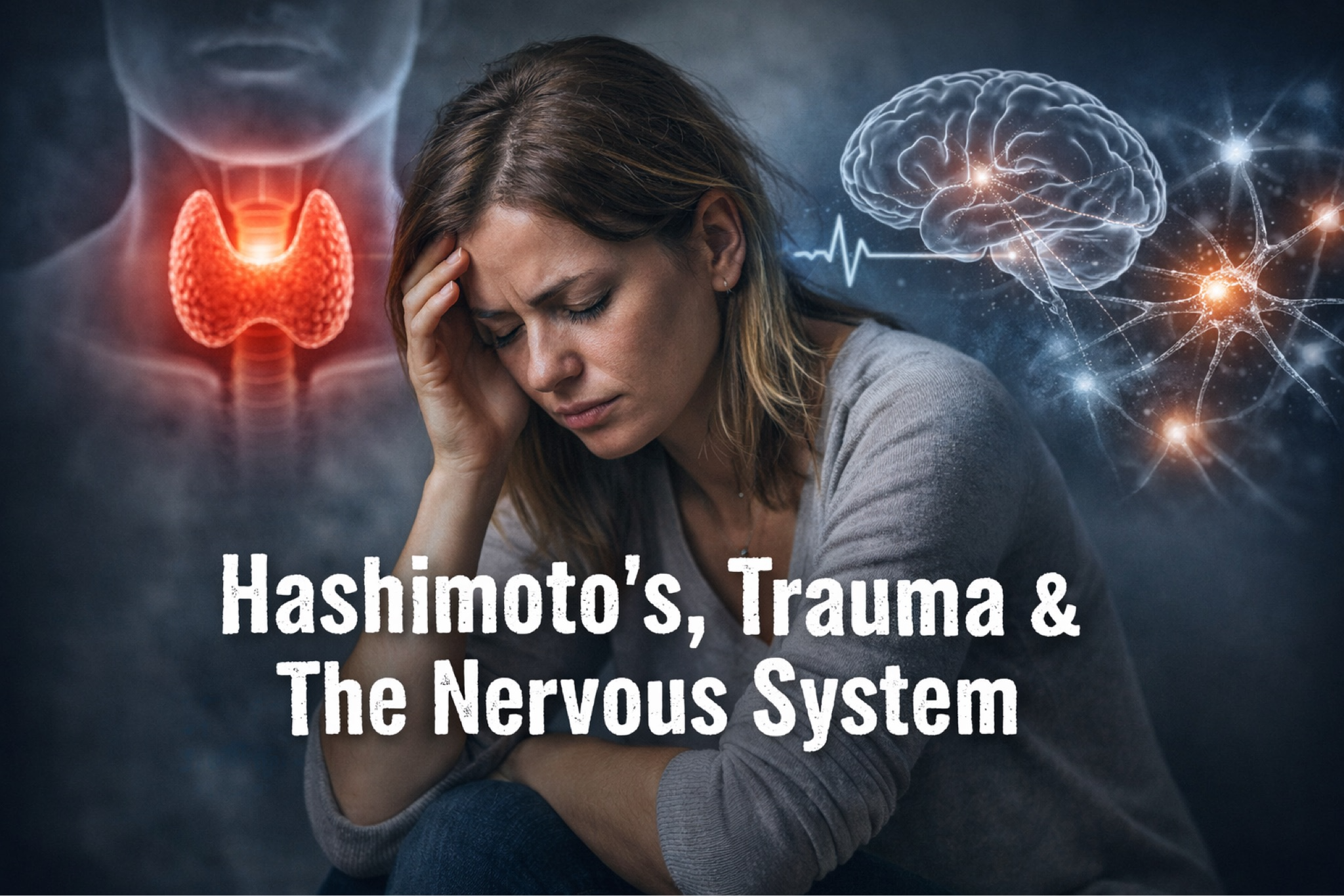
Many people diagnosed with Hashimoto’s thyroiditis arrive in therapy carrying an unspoken question:
“Is my autoimmune illness connected to stress or trauma?”
It is a sensitive question — often shaped by fear of not being taken seriously. People worry that linking emotional wellbeing and physical illness might mean their symptoms are imagined.
Let’s begin with reassurance.
Hashimoto’s is a genuine medical condition.
It is an autoimmune disorder affecting the thyroid gland. It is biological, measurable, and real.
Yet modern research increasingly shows that our immune system, brain, and nervous system are deeply connected. Understanding this connection can help people live more gently — and often more comfortably — with chronic illness.
⸻
What Is Hashimoto’s Thyroiditis?
Hashimoto’s is an autoimmune condition in which the immune system mistakenly attacks the thyroid gland.
The thyroid regulates:
• energy levels
• metabolism
• mood
• temperature control
• concentration and memory
• sleep patterns
Over time, inflammation may reduce thyroid hormone production, leading to symptoms such as:
• persistent fatigue
• brain fog
• anxiety or low mood
• weight changes
• hair thinning
• sensitivity to cold
• reduced resilience to stress
Many people experience fluctuating symptoms, which can feel confusing and frustrating.
⸻
The Nervous System: Your Body’s Safety System
Your nervous system constantly scans the environment asking one essential question:
“Am I safe?”
This process happens automatically, outside conscious awareness.
When the body senses safety:
• inflammation decreases
• digestion improves
• hormones balance
• healing processes activate
When the body senses threat — physical or emotional — it shifts into protection:
• stress hormones increase
• vigilance rises
• immune responses become more active.
This response is not weakness. It is survival biology.
⸻
Trauma and Chronic Stress: A Broader Understanding
Trauma does not only refer to extreme events. From a nervous system perspective, trauma can include:
• emotionally unpredictable childhood environments
• long-term stress or burnout
• feeling unsafe, unseen, or unsupported
• relationship instability
• prolonged caregiving responsibilities
• experiences where emotional needs were repeatedly minimised.
The nervous system adapts intelligently to these environments by remaining alert.
In short, it learns:
“Stay prepared. Don’t fully switch off.”
This adaptation helps survival — but over years, constant vigilance can place strain on the body’s regulatory systems.
⸻
How Stress and the Immune System Are Connected
Research in psychoneuroimmunology shows ongoing communication between the brain and immune system.
Stress signals influence inflammation.
Emotional safety affects immune regulation.
Chronic threat perception can increase immune activation.
For people with a genetic vulnerability to autoimmune conditions, this prolonged activation may contribute to disorders such as Hashimoto’s.
Importantly:
Stress does not “cause” Hashimoto’s on its own.
Rather, it may act as one factor among genetics, hormones, infections, and environmental influences.
Think of it as a perfect storm, not a single cause.
⸻
Why Hashimoto’s Symptoms Often Flare During Stress
Many clients notice symptom flare-ups during:
• grief or loss
• relationship difficulties
• work burnout
• major life transitions
• prolonged emotional pressure.
When stress increases, the nervous system shifts into protection mode. Inflammatory signalling rises, and autoimmune activity may temporarily intensify.
This is not failure — it is physiology.
The body is responding exactly as it was designed to respond to perceived danger.
⸻
A Trauma-Informed View of Autoimmune Illness
People living with chronic illness often feel betrayed by their bodies.
A trauma-informed approach offers a different perspective:
Your body is not attacking you.
Your body is protecting you too strongly.
The same sensitivity that once helped you cope or survive may now require conditions of greater safety and care.
Therapy can help individuals:
• understand nervous system responses,
• reduce chronic stress activation,
• rebuild trust in their body,
• develop compassionate pacing and boundaries.
⸻
Healing Focus: Supporting Nervous System Safety
Healing from Hashimoto’s is not about eliminating stress completely — an impossible task — but about helping the nervous system experience consistent signals of safety.
Helpful supports include:
• emotionally safe relationships
• therapy focused on regulation and self-compassion
• predictable routines
• gentle movement rather than exhaustion-based exercise
• rest without guilt
• learning to listen to bodily limits.
Small moments of safety, repeated over time, help recalibrate the nervous system.
⸻
Therapy Support for Chronic Illness and Autoimmune Conditions
Living with Hashimoto’s can affect identity, confidence, relationships, and emotional wellbeing.
Therapy can provide space to:
• process grief linked to health changes
• reduce anxiety connected to symptoms
• understand mind–body connections safely
• rebuild emotional resilience
• develop sustainable ways of living with chronic illness.
At My Online Counsellor, therapy is grounded in a compassionate, trauma-informed understanding of the whole person — mind and body together.
⸻
A Hopeful Perspective
The nervous system remains adaptable throughout life. It can learn safety again.
Many people living with Hashimoto’s discover that healing does not mean fighting their body harder — but learning to work alongside it.
Healing often looks like:
• steadier energy,
• increased self-understanding,
• calmer emotional responses,
• a renewed sense of inner safety.
Not perfection.
But partnership.