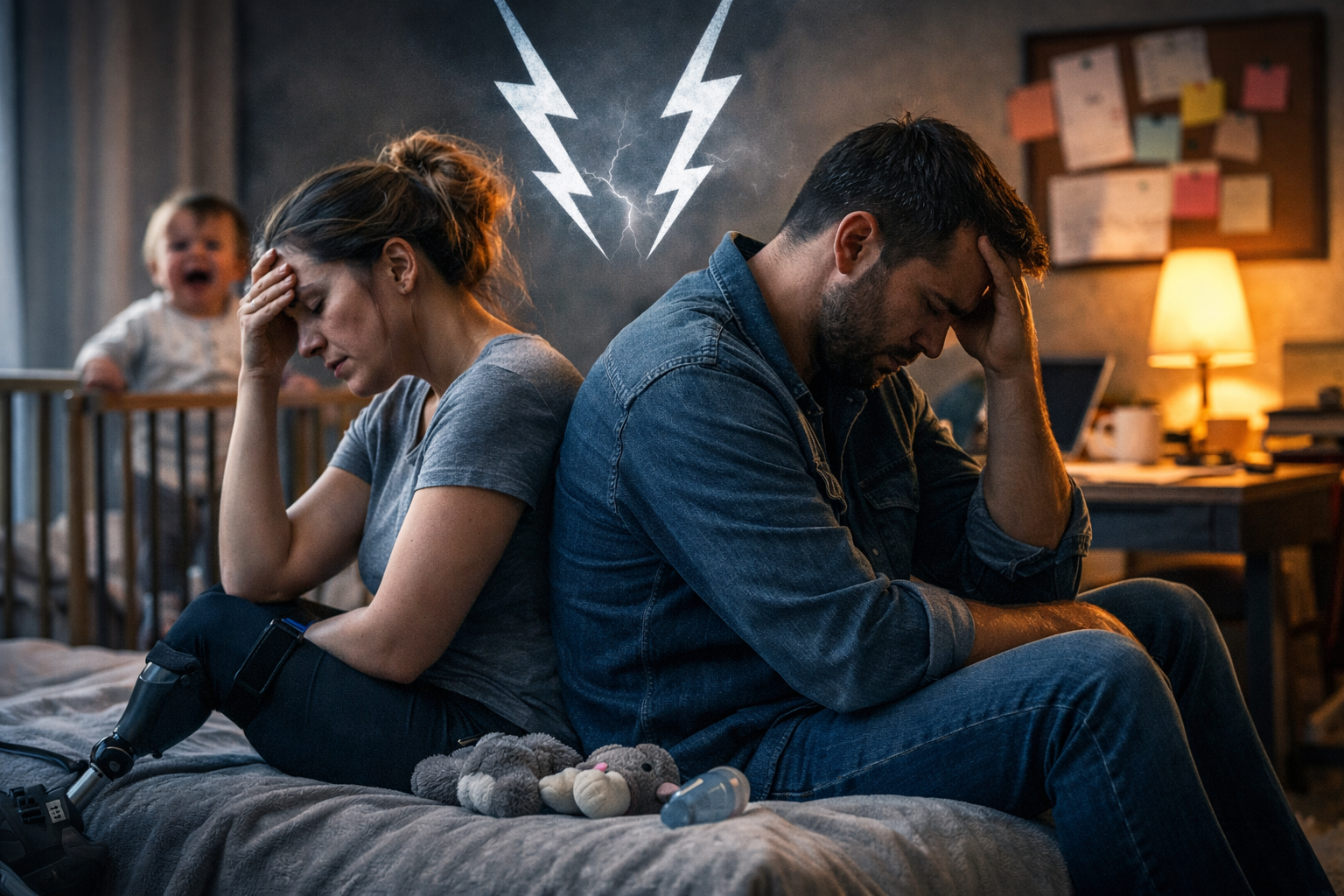
Relationship burnout, attachment styles, ADHD, and emotional exhaustion after becoming parents
Many couples seek therapy believing something is “wrong” with their relationship.
In reality, what they are experiencing is overload.
I work with individuals and couples across the UK who are navigating emotional exhaustion, relationship conflict, and attachment difficulties — often alongside parenting a young child, ADHD, disability, medical trauma, or a demanding job.
When life becomes relentless, even the strongest relationships can feel fragile.
This isn’t relationship failure. It’s nervous system overload.
Why relationship conflict increases during burnout
During periods of chronic stress — such as early parenthood, returning to work, or managing long-term health conditions — the nervous system prioritises survival.
When this happens, attachment styles become more pronounced.
One partner may cope by:
- Becoming more logical or task-focused
- Pulling inward or emotionally shutting down
- Seeking control through structure or solutions
The other may cope by:
- Becoming more emotionally expressive
- Seeking reassurance or closeness
- Feeling easily rejected or alone
Neither response is wrong.
These are different attachment-based survival strategies, not signs of incompatibility.
“We are not fighting each other — we are fighting exhaustion.”
This reframe alone can reduce blame and defensiveness.
Attachment styles under stress: what couples often misunderstand
In my counselling work, I frequently see couples where:
- One partner has a fearful-avoidant or disorganised attachment style, sometimes alongside ADHD
- The other has an anxious or preoccupied attachment style, often shaped by earlier relational or medical trauma
Under stress:
- Logic can feel safer than emotion
- Emotional expression can feel urgent rather than optional
The problem isn’t the attachment styles themselves — it’s what happens when two dysregulated nervous systems collide.
A real-world example from therapy
A couple came to counselling shortly after the birth of their child.
Both were exhausted. One partner managed stress by withdrawing and thinking logically. The other needed reassurance and emotional connection to feel safe.
Their arguments weren’t about chores, tone, or timing — they were about unmet attachment needs amplified by exhaustion.
Once this was named, the work shifted from “who’s right?” to:
- How do we regulate first?
- How do we protect connection when we’re both depleted?
- How do we repair quickly, rather than perfectly?
A weekly relationship check-in (20 minutes)
This structure is particularly helpful for couples experiencing emotional burnout, ADHD in relationships, or recurring conflict.
This is not a problem-solving conversation.
Step 1: Regulation check (1 minute)
Each partner answers:
“On a scale of 1–10, how regulated do I feel right now?”
If either person is below 5, keep it gentle or reschedule.
Step 2: Appreciation (5 minutes)
Each partner names one specific thing the other did that helped this week.
- No minimising.
- No correcting.
Step 3: What felt heavy? (10 minutes)
Use this format:
- “This week I felt ___ when ___ happened.”
- “What I needed in that moment was ___.”
The listener reflects only:
- “What I hear is…”
Step 4: One small adjustment (4 minutes)
Finish with:
“One small thing that would help next week is…”
Small changes rebuild trust faster than big promises.
What to do when you’re triggered
Many couples fall out not because of conflict — but because they don’t pause early enough.
Early warning signs
- Raised voice
- Emotional shutdown
- Rapid problem-solving
- Tearfulness or urgency
Agreed pause phrase
“I’m getting flooded — I need a pause, not distance.”
This protects emotional safety.
During the pause (20–60 minutes)
Each partner focuses on regulating their body:
- Walking
- Breathing
- Music
- Gentle movement
Avoid rehearsing arguments.
Return phrase
“I’m back. I still care. Can we try again slowly?”
Repair builds attachment security.
Sharing responsibility without resentment
Instead of asking “Is this fair?”, try:
“Is this sustainable for us right now?”
The three invisible workloads
- Physical tasks (doing)
- Cognitive load (planning, remembering)
- Emotional labour (anticipating, soothing)
Resentment often lives in the invisible categories.
Practical support tools
- Shared digital lists or whiteboards
- Clear ownership (not “helping”)
- Weekly reviews — never mid-conflict
ADHD-friendly principle:
If it isn’t visible, it doesn’t exist.
A trauma-informed understanding
For some couples, additional layers matter:
- Lifelong medical trauma or disability can make needing help feel exposing
- Fearful-avoidant attachment and ADHD can make closeness feel risky
- Emotional expression can feel unsafe rather than relational
Naming this gently reduces shame and opens the door to compassion.
Repair phrases that calm, not escalate
- “I’m overwhelmed, not uncaring.”
- “I’m emotional because I need reassurance.”
- “When I go quiet, it’s about fear — not lack of love.”
- “I’m not attacking; I’m reaching.”
- “Can we slow this down together?”
Fast repair matters more than perfect communication.
A final thought
This may be a season of survival — not a verdict on your relationship.
The work right now is not to be perfect partners, but to:
- Reduce harm
- Share the load
- Protect emotional connection
- And stay curious about each other, even when exhausted
Therapy can help you understand these patterns, regulate together, and rebuild a sense of safety — without blame or judgement.
Looking for relationship counselling in the UK?
If you’re experiencing:
- Relationship burnout
- Attachment-related conflict
- ADHD in your relationship
- Emotional exhaustion after becoming parents
- Difficulty communicating without falling out